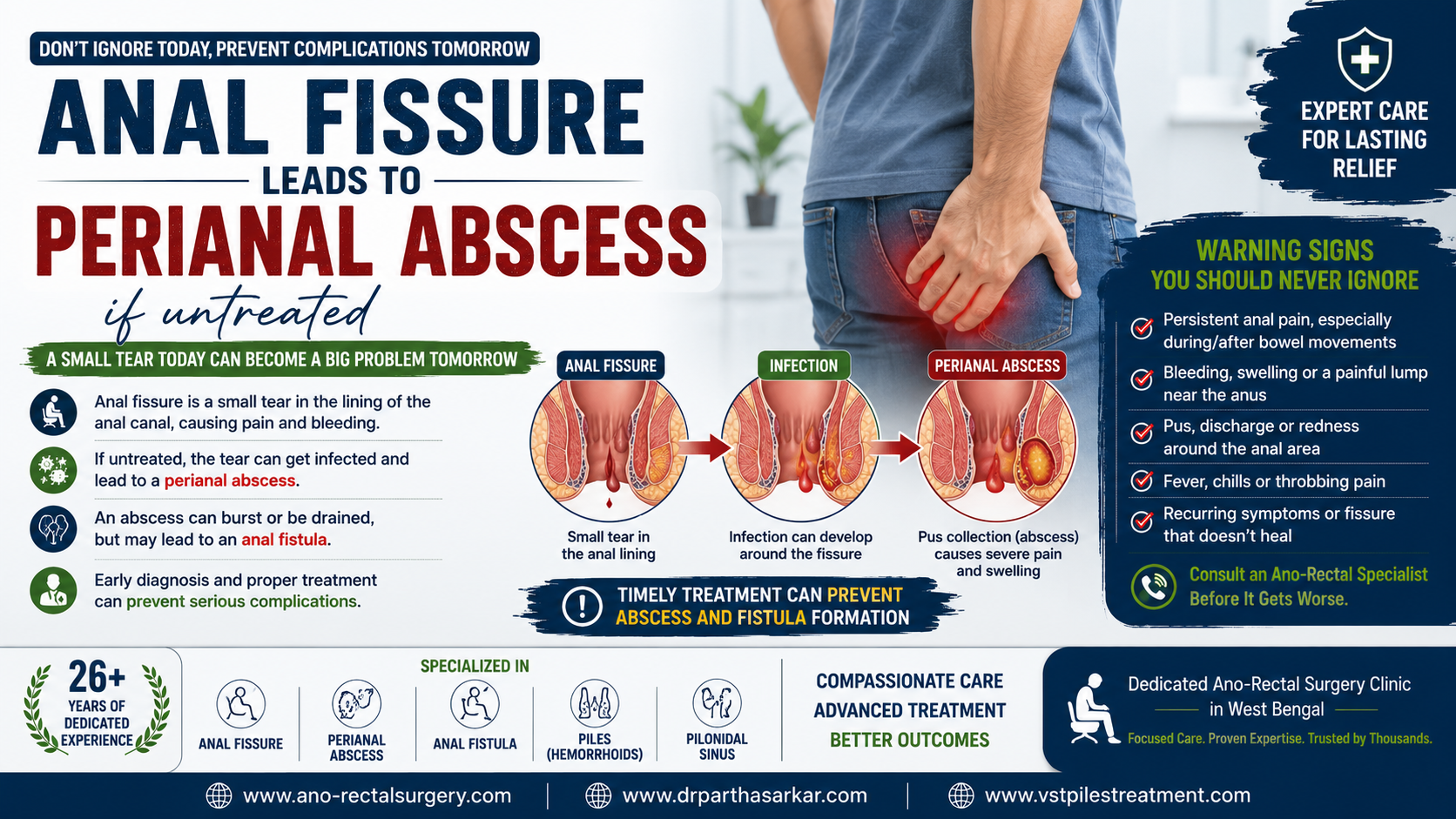
An anal fissure may look like a small problem, but persistent symptoms should never be ignored. It is a small tear in the lining of the anal canal, commonly associated with constipation, hard stools and straining during bowel movements.
Many acute fissures can heal with appropriate treatment and lifestyle changes. However, when an anal fissure does not heal and becomes chronic, it can cause persistent pain and other complications. In some cases, infection around an anal fissure may contribute to the formation of a perianal abscess and potentially an anal fistula.
Understanding the warning signs and seeking timely medical attention can help prevent a relatively manageable condition from becoming more complicated.
What Happens When an Anal Fissure Is Left Untreated?
An anal fissure usually causes sharp or burning pain during and after bowel movements. Bright-red bleeding may also occur.
When a fissure fails to heal, repeated trauma during bowel movements can keep reopening the wound. Persistent muscle spasm may also reduce blood flow to the affected area, making healing more difficult.
A fissure lasting more than eight weeks is generally considered a chronic anal fissure and may require further medical treatment.
Can Anal Fissure Cause a Perianal Abscess?
Not every anal fissure develops into an abscess. However, an anal fissure creates a break in the protective lining of the anal canal. If the area becomes infected, an abscess can develop in some patients.
A perianal abscess is a collection of pus caused by infection in the tissues surrounding the anus. It can cause considerable pain and generally requires prompt medical evaluation.
If an abscess subsequently drains but does not heal properly, an abnormal tunnel called an anal fistula may develop.
Therefore, persistent or changing symptoms around an anal fissure should not simply be ignored.
Warning Signs You Should Never Ignore
Consult an anorectal specialist if you experience:
- Persistent or increasing anal pain
- Pain that becomes throbbing or continuous
- Swelling or a painful lump near the anus
- Pus or unusual discharge
- Redness and tenderness around the anal area
- Fever or chills
- Recurrent swelling after temporary relief
- A fissure that repeatedly returns or refuses to heal
These symptoms may indicate infection, an abscess or another anorectal condition requiring proper diagnosis.
Early Treatment of Anal Fissure Matters
Treatment at an early stage is often simpler. Depending on the individual condition, management may include dietary and lifestyle changes, stool-softening measures, prescribed topical medicines and other non-surgical treatments.
Persistent or chronic fissures may require additional procedures or surgical treatment after evaluation by a specialist.
Self-medication or repeatedly ignoring the symptoms can delay the correct diagnosis.
Specialized Ano-Rectal Care in Kolkata
With more than 26 years of experience in ano-rectal diseases, Dr. Partha Sarkar provides specialized evaluation and treatment for conditions including:
- Anal fissure
- Piles (hemorrhoids)
- Perianal abscess
- Anal fistula
- Pilonidal sinus
- Recurrent and complex anorectal conditions
Patients experiencing persistent pain, bleeding, swelling or discharge should seek specialist evaluation rather than assuming that every symptom is simply piles.
Don’t Let a Small Tear Become a Bigger Problem
An anal fissure is often treatable, particularly when diagnosed early. But a fissure that refuses to heal or develops signs of infection deserves medical attention.
Early diagnosis and appropriate treatment can relieve pain, promote healing and reduce the risk of further complications.
For more information or specialist consultation, visit: